Choosing between renting and owning a house is one of the biggest financial decisions you’ll ever make. In 2026, rising property prices, interest rates, and changing lifestyles have made this decision even more complex.
So, should you rent or buy a house?
This complete guide breaks down costs, benefits, risks, and long-term value so you can make the smartest decision.
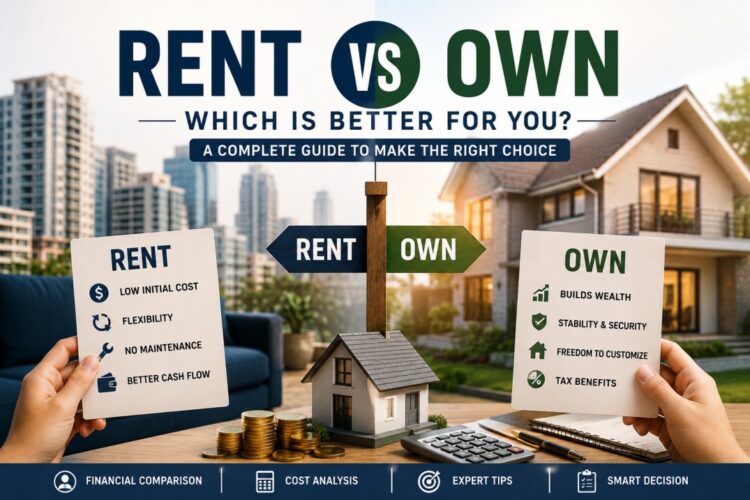
🔍 Quick Comparison: Renting vs Owning
| Factor | Renting | Owning |
|---|---|---|
| Initial Cost | Low | High (Down Payment) |
| Monthly Cost | Fixed Rent | EMI + Maintenance |
| Flexibility | High | Low |
| Investment Value | None | Builds Equity |
| Responsibility | Landlord | You |
| Stability | Less | High |
🏠 What Does It Mean to Own a House?
Owning a house means you have full legal ownership of the property. You either pay upfront or take a home loan (EMI).
✅ Benefits of Owning a House
1. Builds Long-Term Wealth
Every EMI payment increases your ownership (equity). Over time, property value may appreciate.
2. Stability & Security
No landlord, no rent hikes, no eviction risk.
3. Freedom to Customize
You can renovate, design, or modify as you want.
4. Tax Benefits (India)
Home loans offer deductions on principal and interest.
❌ Disadvantages of Owning
1. High Initial Investment
Down payment (10–25%) + registration + interiors.
2. Less Flexibility
Difficult to relocate quickly for jobs or business.
3. Maintenance Costs
Repairs, society charges, and property taxes.
🏢 What Does Renting a House Mean?
Renting means you pay monthly rent to live in a property owned by someone else.
✅ Benefits of Renting
1. Low Upfront Cost
Only deposit + rent (much cheaper than buying).
2. High Flexibility
You can shift anytime—great for job mobility.
3. No Maintenance Stress
Major repairs are handled by the owner.
4. Better Cash Flow
You can invest your savings in business, stocks, or other assets.
❌ Disadvantages of Renting
1. No Ownership
You don’t build any asset.
2. Rent Increases
Annual rent hikes affect long-term cost.
3. Lack of Stability
Owner may ask you to vacate anytime.
💰 Cost Comparison Example (India 2026)
Let’s assume:
- Property price: ₹50 lakh
- Down payment: ₹10 lakh
- Loan: ₹40 lakh
- EMI (8.5%): ~₹35,000/month
- Rent for same property: ₹15,000/month
Renting:
- Monthly: ₹15,000
- 10 years: ₹18 lakh (no asset)
Owning:
- Monthly: ₹35,000
- 10 years: ₹42 lakh (but you own property worth ₹50–70 lakh)
👉 Conclusion: Buying builds wealth, renting saves cash flow.
📊 When Should You Rent?
Renting is better if:
- You move frequently (job/business)
- You don’t have enough savings for down payment
- You want to invest money elsewhere (like business)
- Property prices are too high in your city
🏡 When Should You Buy a House?
Buying is better if:
- You plan to stay in one place for 7–10 years
- You want long-term financial security
- You have stable income for EMI
- You see property appreciation potential
⚖️ Rent vs Buy: The Smart Formula
Ask yourself these 3 questions:
1. Stability: Will I stay here long-term?
2. Financial Strength: Can I afford EMI comfortably?
3. Opportunity Cost: Can my money earn more elsewhere?
🔥 Expert Insight (Important)
Many successful business owners and investors prefer renting + investing extra money instead of locking funds in property.
Example:
- Instead of ₹10 lakh down payment → invest in business or stocks
- Returns may outperform real estate growth
👉 This is especially useful if you’re growing a business
🧠 Final Verdict: Rent or Own?
There is no one-size-fits-all answer:
- Choose Renting → if you want flexibility and liquidity
- Choose Buying → if you want stability and long-term wealth
👉 Smart Strategy (Recommended):
Start with renting → grow income → invest → then buy property at the right time.